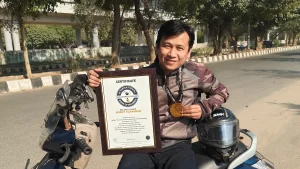
There is a specific frequency of vibration you only feel when you are pushing a machine across the winding hairpins of the Himalayas or the sun-soaked coasts of Kanyakumari. Most people told me I was crazy.
Most people told me I was crazy… but as someone who set a world record, I can tell you that a solo ride across India is a raw, deeply spiritual journey.”
“Bonny,” they said, “you need a heavy bike for those heights.” But as someone who set a world record for the FastestK2K(Kashmir to Kanyakumari) journey on a 110cc scooter, I can tell you: it’s not about the machine; it’s about the spirit and the preparation.
Taking a solo ride across India is a raw, dusty, and deeply spiritual marriage between the road and the rider.
Whether you are navigating the “black ice” of the north or the humidity of the Western Ghats, being prepared is what separates an adventure from a disaster.
In this comprehensive guide, I will walk you through every nuance of planning, execution, and mindset required to conquer the Indian landscape alone.

My Experience: The Solo Ride Mindset
When you are alone on the road, your intuition is your best co-pilot. I’ve learned that real power isn’t measured in engine CC, but in patience and resolve.
Before you twist the throttle, you must accept the Rider’s Code: Never ride after dark. Potholes, high-beam glare from oncoming trucks, and stray cattle make night riding in India exceptionally hazardous even for the most experienced riders.
By starting at first light and stopping before dusk, you ensure you have a clear view of the road and plenty of time to find a secure place to stay. Mental discipline is your greatest asset; staying calm and disciplined with your schedule is what makes you a true rider.
The psychological aspect of a solo ride is often overlooked. You will face moments of extreme loneliness, exhaustion, and doubt. There will be days when the rain is pouring down your neck, and you still have 200 kilometers to go.
Preparation starts in the mind. You must be comfortable with your own company. You must be able to stay calm when a tyre blows out in the middle of a forest. My world record wasn’t just a feat of mechanical endurance; it was a feat of mental discipline.

Choosing the Right Machine for a Solo Ride
You don’t need a 500cc beast to conquer India. I took my TVS Jupiter to Umling La, the world’s highest motorable pass. The best bike for a solo ride is the one you are most comfortable maintaining.
- Maintenance: Ensure your bike is in top-notch condition. Get a thorough service 48 hours before you leave. Check the brake pads, chain tension, and fluid levels.
- Spares: Carry a clutch wire, brake wire, spark plugs, and a puncture kit. In the wilderness, these are more valuable than your camera.
- Tyres: Check your tread depth. If you’re heading to Spiti or Ladakh, consider dual-purpose tyres for better grip on slush and loose gravel.
- Suspension Tuning: If you are carrying heavy luggage, adjust your rear suspension preload. A sagging rear end will affect your handling in the corners, which is the last thing you want on a mountain pass.
Essential Gear for Your Solo Ride Journey

India’s climate is a beast of its own.
Here is my non-negotiable list:
- Helmet: Choose an ECE or DOT-certified helmet. Never settle for just ISI. A full-face helmet is mandatory for wind protection and safety.
- Jacket: Opt for a mesh riding jacket with CE Level 2 protection. Leather is too hot for India’s humidity.
- Boots: High-ankle waterproof boots are essential. Your feet are the closest thing to the road and the most vulnerable in a slide.
- Connectivity: A 20,000mAh power bank is your lifeline. Use a dedicated GPS device or a rugged phone mount with vibration dampeners to protect your phone’s camera sensor.
- Visibility: Add 3M reflective tape to your bike and luggage so trucks can see you in mountain fog or early morning mist.
Staying Healthy During a Solo Ride
The “Golden Rule” of touring is to stay hydrated. I carry a 3L hydration pack so I can sip water without stopping. Avoid heavy, oily meals that make you drowsy; stick to light snacks like idlis, poha, or fruit.
Fatigue is a silent killer. On a solo ride, you don’t have a pillion or a buddy to tell you when you’re swaying in your lane.
If you find yourself staring blankly at the road, pull over immediately. Wash your face, do ten jumping jacks, and drink some tea. Never force yourself to ride “just one more hour” when fatigue has already set in.
Planning Your Route and Safety
For a successful solo ride, your itinerary should be flexible, but your safety rules should be rigid. India is a subcontinent, not just a country. The terrain changes every 300 kilometers.
- The 100km Rule: Stop every 100km to rest your brain and let your engine cool. Use this time to check your luggage straps and tire pressure.
- Digital Visibility: Share your live location via WhatsApp with a trusted contact at all times. Use apps like “Life360” or “Google Maps Location Sharing.”
- Money Management: Divide your cash into three different places: your wallet, your riding jacket, and a hidden pouch in your luggage. Never keep all your funds in one place.
- Documentation: Carry physical copies of your RC, Insurance, PUC, and Driving License. In many remote areas of Arunachal Pradesh or Ladakh, digital copies won’t be accepted by the local police or army checkpoints.

Navigating the Terrain
A solo ride in North India is vastly different from South India. In the North, you deal with altitude sickness (AMS) and unpredictable landslides.
In the South, you deal with intense humidity and sudden tropical downpours. Always check the weather forecast for the specific district you are entering, not just the state.
If you are entering “Inner Line Permit” zones, ensure you have your permits sorted at least a week in advance. Nothing kills the momentum of a solo ride like being turned back at a border gate because of paperwork.
The Art of Packing for a Solo Ride
The tendency for a first-timer is to overpack. Remember: you have to carry everything you bring.
- Weight Distribution: Keep the heaviest items at the bottom and as close to the bike’s center of gravity as possible. Use saddlebags or a tail bag. Avoid wearing a backpack; it causes back fatigue and can be dangerous in a fall.
- The Tool Kit: Don’t just carry tools; know how to use them. Practice changing a fuse and a bulb at home.
- First Aid:Carry a basic kit with ORS, pain relievers, antiseptic cream, and bandages. Include a roll of duct tape and a few zip ties, they are invaluable for quick, temporary fixes on the road.

Dealing with Local Interaction
A solo ride often becomes memorable because of the human connections you make on the road.
While Indian hospitality is genuine and generous, traveling alone requires you to stay friendly yet appropriately guarded.
- Don’t announce your exact sleeping location to strangers.
- If someone asks if you are alone, and you feel uncomfortable, it’s okay to say your “friends are 20 minutes behind.”
- Respect local cultures. In rural villages, dress modestly and always ask for permission before taking photos of people.
Maintaining Your Bike During the Journey
Every morning before you start your solo ride, perform a“T-CLOCS” inspection:
- Tyres: Check for cuts and pressure.
- Controls: Ensure levers and pedals are working smoothly.
- Lights: Check high beam, low beam, and indicators.
- Oil: Check levels and look for leaks.
- Chassis: Check the frame and suspension.
- Stand: Ensure the side/center stand isn’t loose.
Lubricate your chain every 500km. A dry chain will sap your power and eventually snap, leaving you stranded.
During my K2K journey, I was meticulous about my scooter’s belt and variator. Small machines require even more attention to detail than big ones.
Budgeting for a Month on the Road
A solo ride across India can be as cheap or as expensive as you want it to be.
- Fuel: This will be your biggest expense. Calculate your bike’s mileage and add a 20% margin for mountain climbing and traffic.
- Accommodation: Use apps like Zostel or Hosteller for budget-friendly and secure stays where you can meet other travelers.
- Food:Rely on local dhabas whenever possible. Their meals are typically fresher, quicker, and more consistent than those at upscale restaurants.
- Emergency Fund: Always keep a separate “stash” of ₹10,000 for major repairs or medical emergencies.
Pro-Tips: The Solo Rider’s Survival Summary
| Category | Actionable Advice | Why It Matters |
| Timing | Start at 5:00 AM | Beats the brutal midday heat and lets you clear congested city exits before the morning rush. |
| Ergonomics | Ditch the Backpack | Use bungee nets or tail bags. Wearing weight on your back causes rapid fatigue and spinal strain. |
| Security | Trust Your Gut | If a road or hotel feels “off,” leave. Your intuition is your most valuable safety sensor when riding alone. |
| Technical | Master Basic Repairs | Know how to change a tube, fuse, or cable. It’s the difference between a 10-minute fix and being stranded for hours. |
| Admin | Waterproof Pouch | Keep your physical RC, DL, and permits in a neck pouch. Paperwork is still king at remote checkpoints. |
The Road is Your Teacher
The mountains are indifferent to your machine or the price of your gear. What matters is the respect you bring and the openness of your spirit. A solo ride is never just about reaching a place; it is about who you evolve into along the road between each milestone.
You will return home with more than just photos; you will return with a renewed sense of self-reliance and a deeper love for the diversity of India.
Every kilometer is a lesson. Every breakdown is an opportunity to learn. Every sunrise in a new town is a gift. Preparation is the foundation, but the journey itself is the reward. Pack your bags, check your tires, and start your engine. India is waiting for you.
Join the Community-
I want to hear from you. Are you planning your first solo ride this year? What’s the biggest fear holding you back? Drop a comment below, and let’s discuss it. If you have already done a long trip, tell me, what’s the one piece of gear you never leave home without? Let’s get the conversation started.
Disclaimer- This article is based on personal riding experience. Road conditions, rules, and risks vary by region. Ride responsibly and follow local laws.
Is it safe to do a solo ride across India as a beginner?
Yes, provided you are disciplined. Start with shorter 200km weekend trips to build stamina. Most importantly, strictly follow the “No Night Riding” rule mentioned above to avoid the risks of unlit vehicles and unpredictable road hazards that emerge after sunset.
What is the best time of year for an All-India solo ride?
October to March is the “Golden Time.” You will avoid the extreme 45°C heat of the plains and the treacherous landslides caused by monsoon rains. If you want to visit Ladakh, the time is narrower (June to September).
Can I do a long-distance solo ride on a scooter?
Absolutely. As a world record holder for the fastest K2K on a scooter, I am living proof. The key is to manage the engine heat and not push the machine past its comfort zone (usually 60-70 km/h for small engines).
How do I handle a breakdown in a remote area?
First, move the bike to a safe spot off the road. Use your spares to attempt a repair. If you can’t fix it, use your phone to call for roadside assistance (many insurance policies offer this). If there’s no signal, wait for a fellow rider or a truck driver. The Indian biking community is exceptionally helpful.
How much should I budget for a 30-day solo ride?
On average, a budget-conscious rider should expect to spend between ₹1,500 and ₹3,000 per day. This covers fuel, hostel stays, and three meals. Always maintain a digital backup of your funds via UPI, but carry physical cash for use in rural areas.